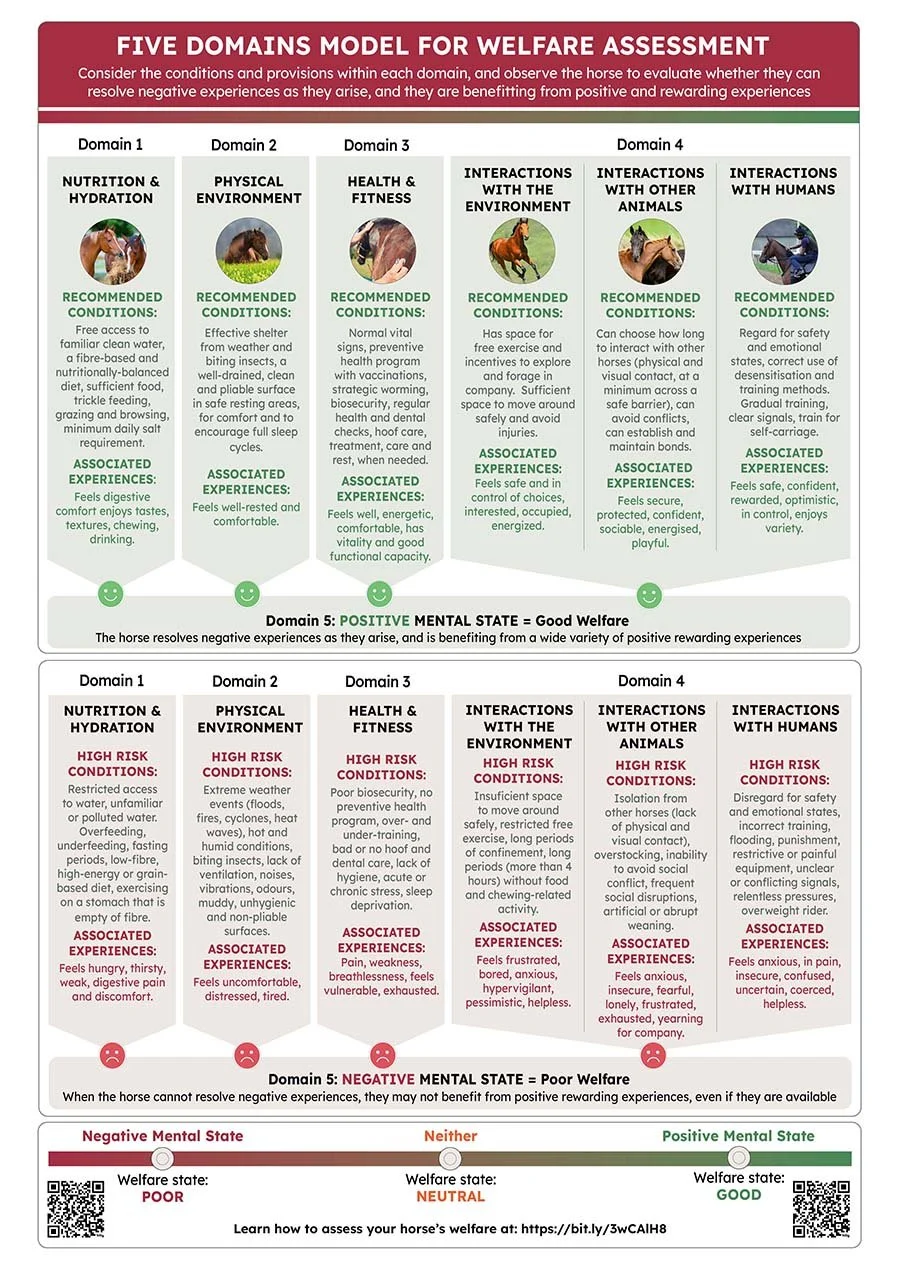
The Five Domains of Animal Welfare- What do horses need to thrive?
Animal Welfare
When we think about caring for horses, it’s easy to focus on the basics: food, water, and shelter. But modern animal welfare science shows that true wellbeing goes much deeper than simply meeting an animal’s physical needs.
One of the most widely used frameworks for understanding animal welfare is called the Five Domains Model, developed by animal welfare scientist Professor David Mellor. This model helps us consider not only an animal’s physical health, but also their emotional wellbeing and quality of life.
The Five Domains encourage us to think about whether animals are simply surviving, or whether they are actually living good, fulfilling lives.
1. Nutrition
The first domain looks at whether the animal has access to appropriate food and clean water.
For horses, this means more than just feeding them enough. It includes providing a diet suited to their digestive system, plenty of forage, and opportunities to eat naturally throughout the day. Good nutrition helps horses feel comfortable, satisfied, and physically healthy.
2. Physical Environment
The second domain considers the environment the animal lives in. Horses need space to move, comfortable footing, shelter from extreme weather, and an environment that feels safe. The physical environment also affects how relaxed and comfortable a horse feels in their daily life.
3. Health
Health is about maintaining the horse’s physical wellbeing. This includes freedom from injury, illness, or chronic pain, as well as appropriate veterinary care, hoof care, and overall fitness. When horses feel physically well, they are far more able to engage with the world around them.
4. Behaviour
Horses are naturally curious, social animals with strong instincts. This domain focuses on whether a horse is able to express natural behaviours such as grazing, moving freely, interacting with other horses, and exploring their environment. When horses are restricted from expressing these behaviours, frustration and stress can develop.
5. Mental State
The fifth domain brings everything together. The horse’s mental state reflects how the first four areas influence how they feel emotionally. Experiences can range from negative states such as fear, pain, or frustration, to positive ones like comfort, curiosity, and contentment.
The goal of good welfare is not just to prevent suffering, but to create opportunities for animals to experience positive emotions and a life worth living.
Why This Matters
The Five Domains model reminds us that animals are sentient beings with emotional experiences. Their wellbeing is shaped by the combination of their physical health, environment, social interactions, and daily experiences.
For those of us who work with horses, this framework encourages us to continually ask:
Are our horses comfortable?
Can they express natural behaviours?
Are they experiencing positive moments in their lives?
When we think about welfare in this way, we move beyond basic care and toward creating environments where horses can truly thrive, not just survive.